
Overview
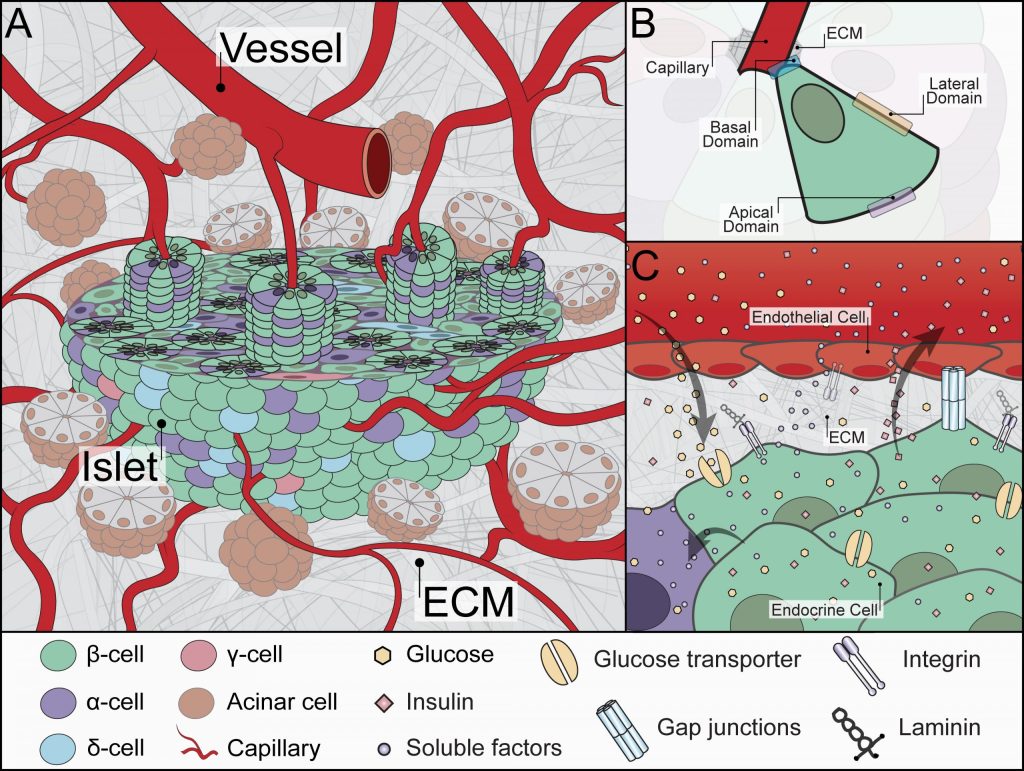
Our research centers on engineering bioactive materials to treat Type 1 diabetes (T1D), specifically in polymeric surface engineering of cells, fabrication of three-dimensional scaffolds, controlled oxygen and drug release, and the design of new approach methodologies (NAMs) to study pathology and screen therapeutics.. Our translational research portfolio spans material development, extensive evaluation of preclinical models, and clinical translation.
Main Research Areas
Engineering Cellular Implants
Creating supportive devices for beta cell implantation
- 3D printing porous scaffolds to house cells and support host engraftment
- Engineering novel bioactive materials that deliver oxygen
- Designing vascular beds for quick perfusion of the implant
Immuno-modulatory Biomaterials
Decreasing immunological rejection of cellular implants
- Local drug delivery to reduce systemic burden
- Polymeric grafting to reduce cellular recognition
- Designing new material interfaces that instruct immune responses
Diabetes New Approach Methodologies (NAMs)
Creating platforms to study disease progression and screen new therapeutics
- Designing 3D microphysiological systems with flow fields and a pancreatic niche
- Optimizing 3D extracellular matrix materials for studied human T1D
- Leveraging image analysis tools to gain new insight into temporal and spatial immune interactions with beta cell implants