
By Ken Duffy (Northeastern University)
Talk Abstract: Soft Input (SI) error correction decoders avail of input beliefs about the accuracy of received bits to enhance their decoding. Blockwise Soft Output (SO) decoders return beliefs about the veracity of their returned decoding. Following seminal work of Forney in the 1960s, blockwise soft output is normally only available for decoders that pro-offer more than one decoding possibility, i.e. list decoders. Forney’s approximation is, essentially, the likelihood that the preferred decoding is correct given it assumed to be in the list.
As a consequence of our ongoing work developing Guessing Random Additive Noise Decoding, recently, we have established that several decoders can produce highly accurate unconditional SO, even for a single decoding. In this talk, we explain methods from the statistics literature on forecasting that can be used to quantify SO quality and explore some powerful code constructions that open up as a consequence.
Based on work with Muriel Medard (MIT), Peihong Yuan (MIT), Lukas Rapp (MIT), Kevin Galligan (MU), Sarah Khalifeh (NU), Jiewei Feng (NU).
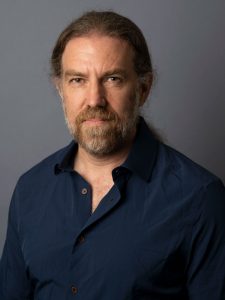 Speaker Bio: Ken R. Duffy is a professor at Northeastern University with a joint appointment in the Department of Electrical & Computer Engineering, where he served as interim chair, and the Department of Mathematics. He received a B.A (mod) in Mathematics and a PhD in Applied Probability, both awarded by Trinity College Dublin. He was previously a professor at National University of Ireland, Maynooth, where he was the Director of the Hamilton Institute, an interdisciplinary research centre, from 2016 to 2022. He was one of three co-Directors of the Science Foundation Ireland Centre for Research Training in Foundations of Data Science, which funded more than 120 PhD students. He is a co-founder of the Royal Statistical Society’s Applied Probability Section (2011), co-authored a cover article of Trends in Cell Biology (2012), is a winner of a best paper award at the IEEE International Conference on Communications (2015), the best paper award from IEEE Transactions on Network Science and Engineering (2019), the best research demo award from COMSNETS (2022), the best demo award from COMSNETS (2023), and the IEEE Milcom Fred W. Ellersick award for best unclassified paper (2024). He is an associate editor of IEEE Transactions on Information Theory and of IEEE Transactions on Molecular, Biological, and Multi-scale Communications.