Nanoscape IoT Research Lab
Developing smaller, more secure, and more efficient computing systems, sensors, and edge devices using Internet of Things (IoT) technology
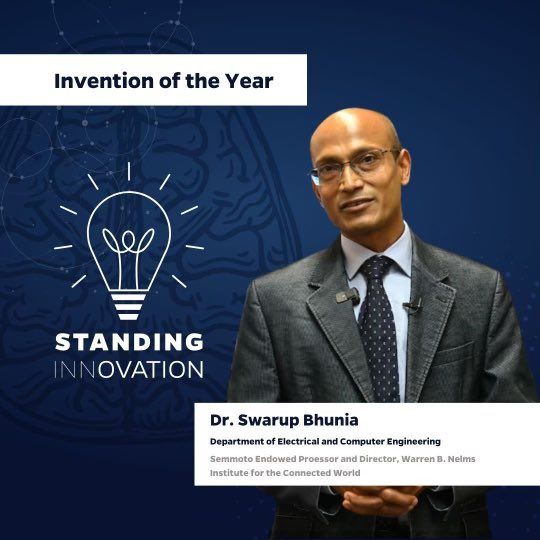
Nanoscape is the nanocomputing research laboratory in the Department of Electrical and Computer Engineering (ECE) at University of Florida, led by Dr. Swarup Bhunia.
Nanoscape Lab’s research aims to develop smarter, safer, and more efficient computing systems, sensors, and edge devices in the broad field Internet of Things (IoT) technology and its applications in diverse sectors. The lab also focuses on security and trustworthiness of these hardware-software components used in IoT. Lab research focuses on many applications in areas such as healthcare, environment, education and workforce development, automotive systems, and consumer electronics.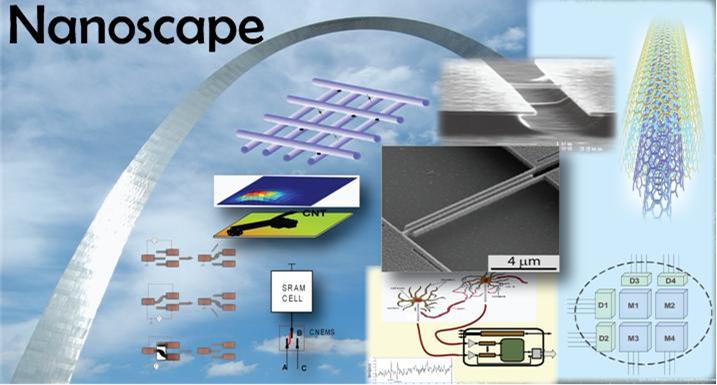
Research
Wearable Devices for Healthcare
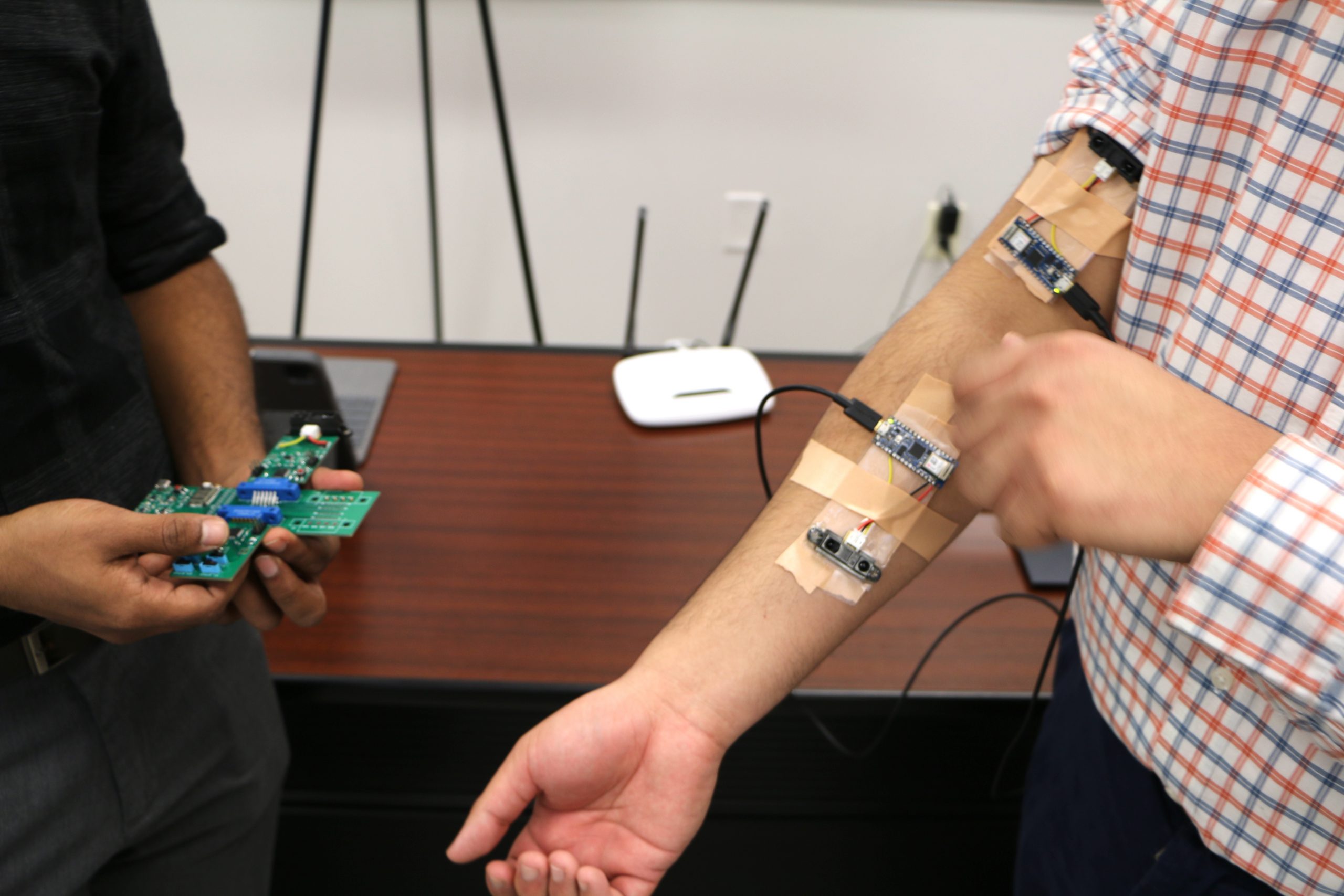
Several projects in the lab are developing smart, connected wearable devices to revolutionize health and patient care using IoT, such as in-shoe sensor for foot and ankle surgery patients, pasteables “peel-and-stick” devices, scapular motion monitoring for improved orthopedic care, and sleep monitoring devices.
IoT for Honeybees
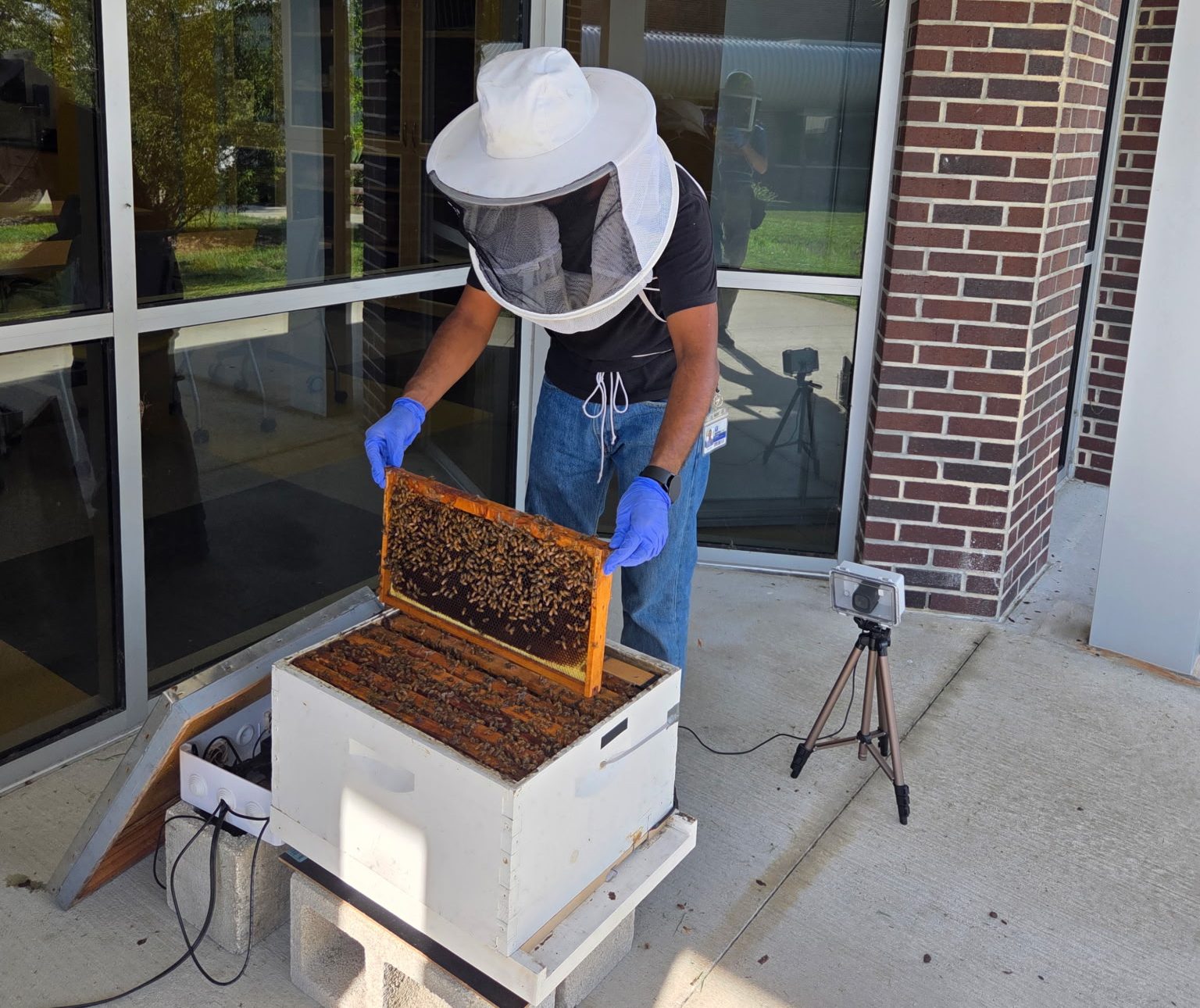
In collaboration with colleagues in UF IFAS and Entomology, we are conducting research on improving honeybee health and crop pollination quality with AI-powered IoT.
Smart Systems for Mosquito Research
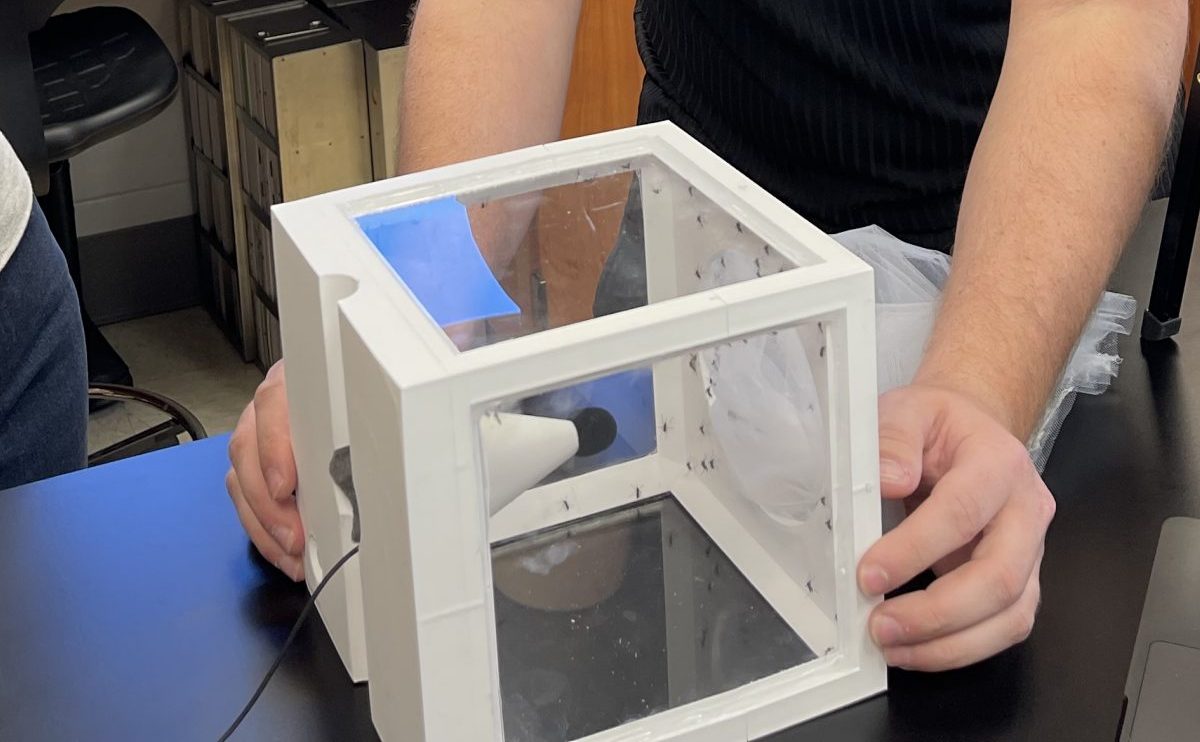
In collaboration with the Department of Entomology, we are working towards studying the behavior and developing systems to monitor mosquito behavior and differentiate between species.

Safety of IoT Systems
We are working towards improving safety of IoT systems, including autonomous systems with a specific emphasis on aerospace systems.
One of our current projects is collaborative research with Florida Institute of Technology, sponsored through the NASA ULI program.
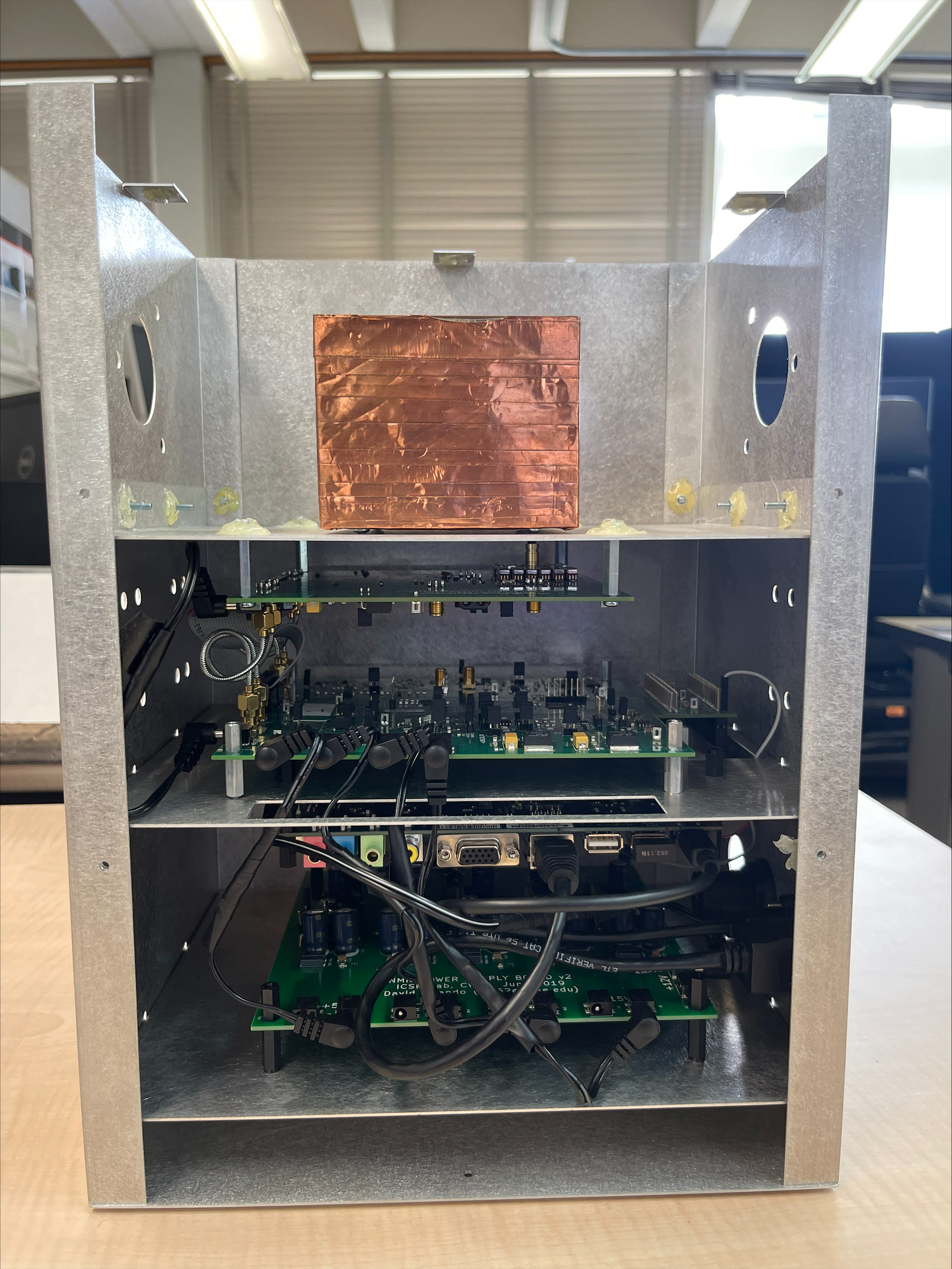
NQR Spectroscopy for Global Medicine and Food Safety
The Nuclear Quadrupole Resonance (NQR) spectroscopy technique allows for non-invasive, on-site detection of illegal substances and authentication of pharmaceuticals, food products, packaged foods, produce, and supplements. This provides a unique, reliable method to verify integrity and quality in modern supply chains.
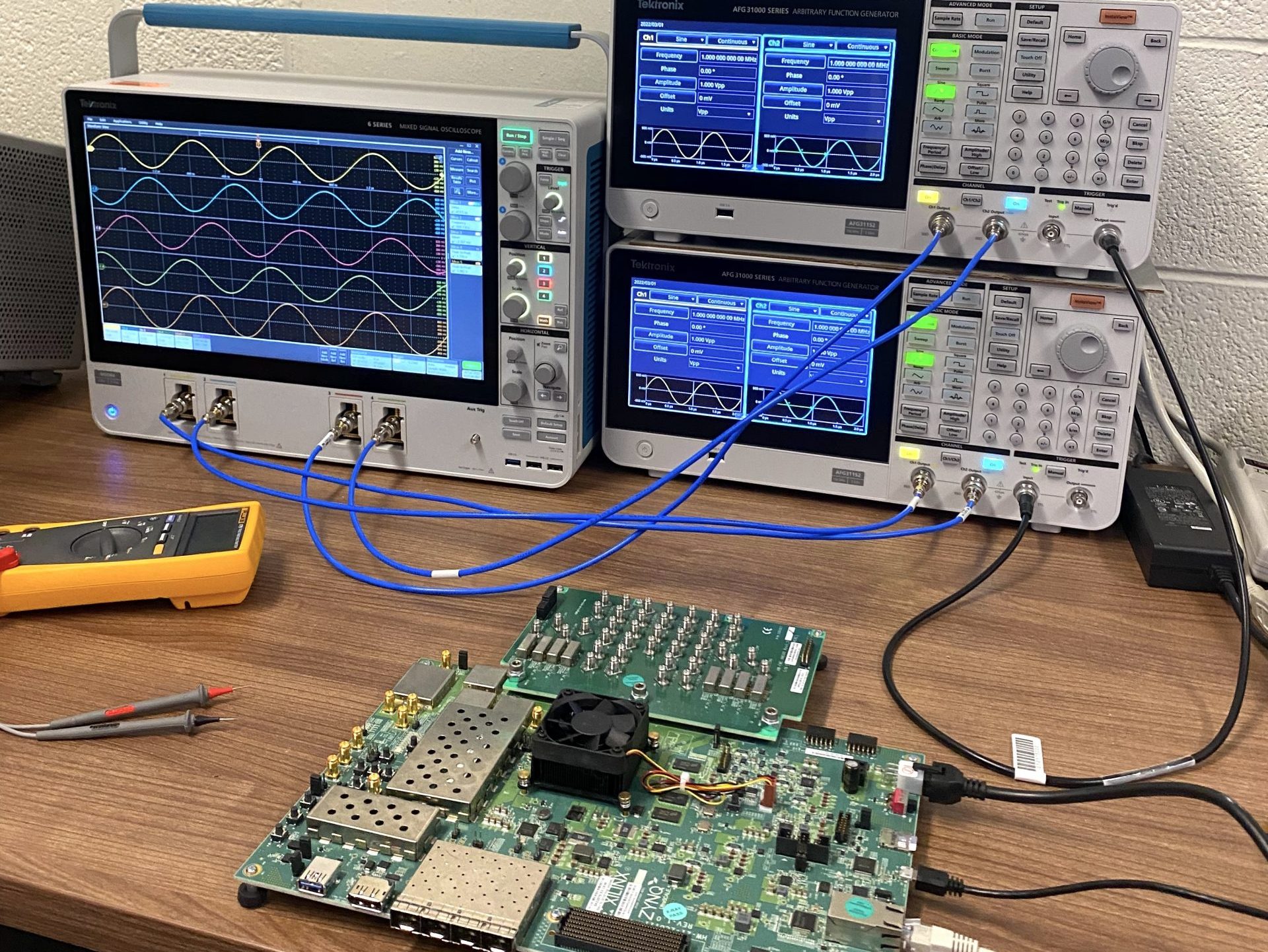
Hardware Trust and Security
Security of electronic hardware, in particular, integrated circuits (ICs), is rapidly becoming an important design, test, and validation concern with a growing number of attacks at different stages of IC life-cycle. Nanoscape is presently investigating solutions for hardware protection that ensures trust and security for all parties involved while not affecting the end user experience.
Education

Hands-On Training for Santa Fe College Instructors
Through the NASA-funded TRANSCEND project, Dr. Bhunia and a collaborative team of researchers are working to train community college instructors on AI and IoT safety concepts with hands-on, experiential training done on the AHA Board. Beginning with Santa Fe College, the goal is to train the instructors so they can integrate AI safety concepts into their own courses, and eventually bring this training to all 34 community colleges in Florida.

SURPASS Scholarship for Service (SFS)
Dr. Bhunia serves as the Director for the SURPASS program, the NSF-funded Scholarship for service (SFS) program at university of Florida, developed in collaboration with Florida International University (FIU), which aims at creating up to 50 well-trained graduate/undergraduate students for our nation’s cybersecurity workforce. The unique attribute of the SURPASS training program is providing student exposure to hardware and system security topics, including hands-on experiential learning of hardware-oriented attacks and defenses.

HArdware HAcking (HAHA) Board for Hands-On Education and Training
This board along with the AHA Board were developed in the lab to use in education, training, and workforce development for hardware security concepts. The boards are being used with a wide variety of learners, like K-12 students, freshmen engineering students, and veterans.

AI Hardware Adventure (AHA) Platform
The AHA (AI Hardware Adventure) platform, provides a hands-on, game-based learning introduction to intelligent edge computing and the key principles of system operation for undergraduate students from any disciplines. Students perform a set-of well-designed experiments with the AHA hardware platforms to understand the underlying hardware components and AI/ML algorithms used for intelligent decision making. The students also pursue a design project where the use the AHA platform for build a smart edge computing device for an application of their choice.
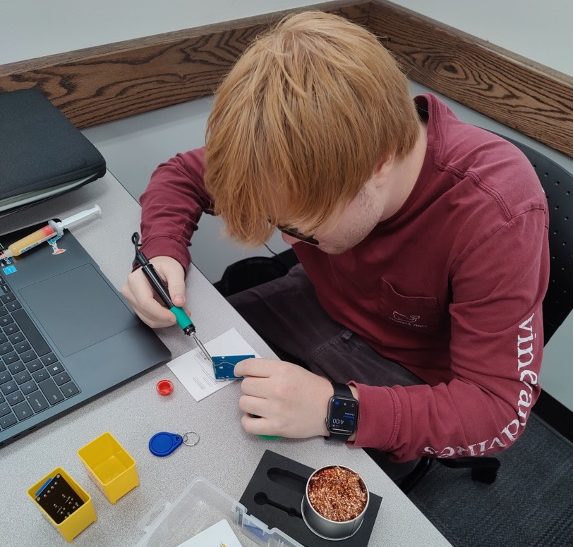
Hands-On AI Course for Freshmen Engineering Students
The course EGN1935 – Special Topics in Freshmen Engineering: Adventures in ECE Design has been specifically designed to provide students with an immersive, hands-on experience in exploring AI hardware principles and applications. Instructed by Dr. Swarup Bhunia, the course’s goal is to make AI education accessible and immersive for first-year engineering students, even without prior knowledge of AI or hardware concepts.
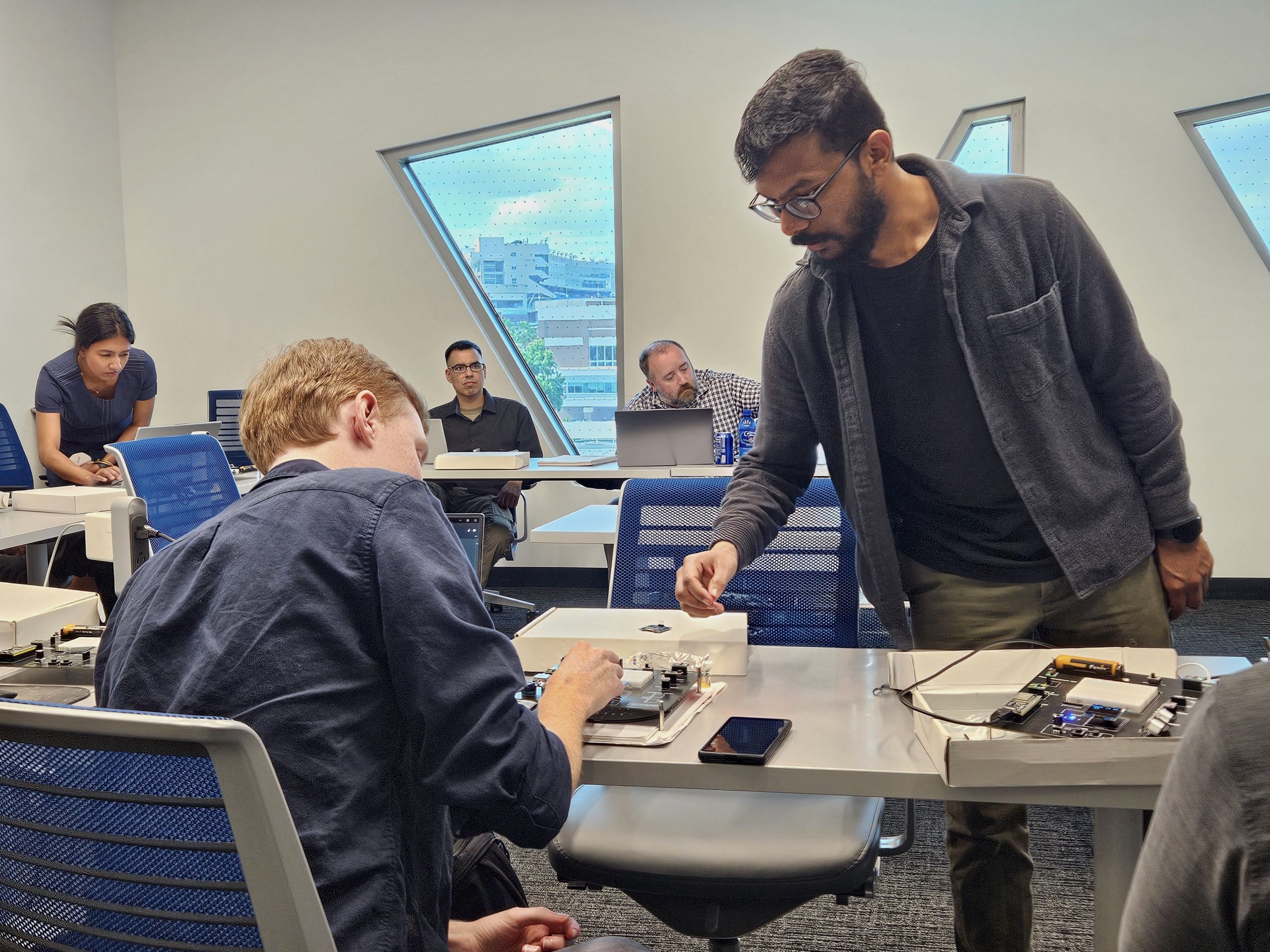
Upskilling our Military Veterans
A project on training cybersecurity with emphasis on hardware security to our military veterans through a hands-on, experiential learning approach. This project is funded by NIST.

CAD for Assurance
The CAD for Trust and Assurance website is an academic dissemination effort by researchers in the field of hardware security. The goal is to assemble information on all CAD for trust/assurance activities in academia and industry in one place and share them with the broader community of researchers and practitioners in a timely manner, with an easy-to-search and easy-to-access interface. We’re including information on many major CAD tools the research community has developed over the past decade, including open-source license-free or ready-for-licensing tools, associated metrics, relevant publications, and video-demos.
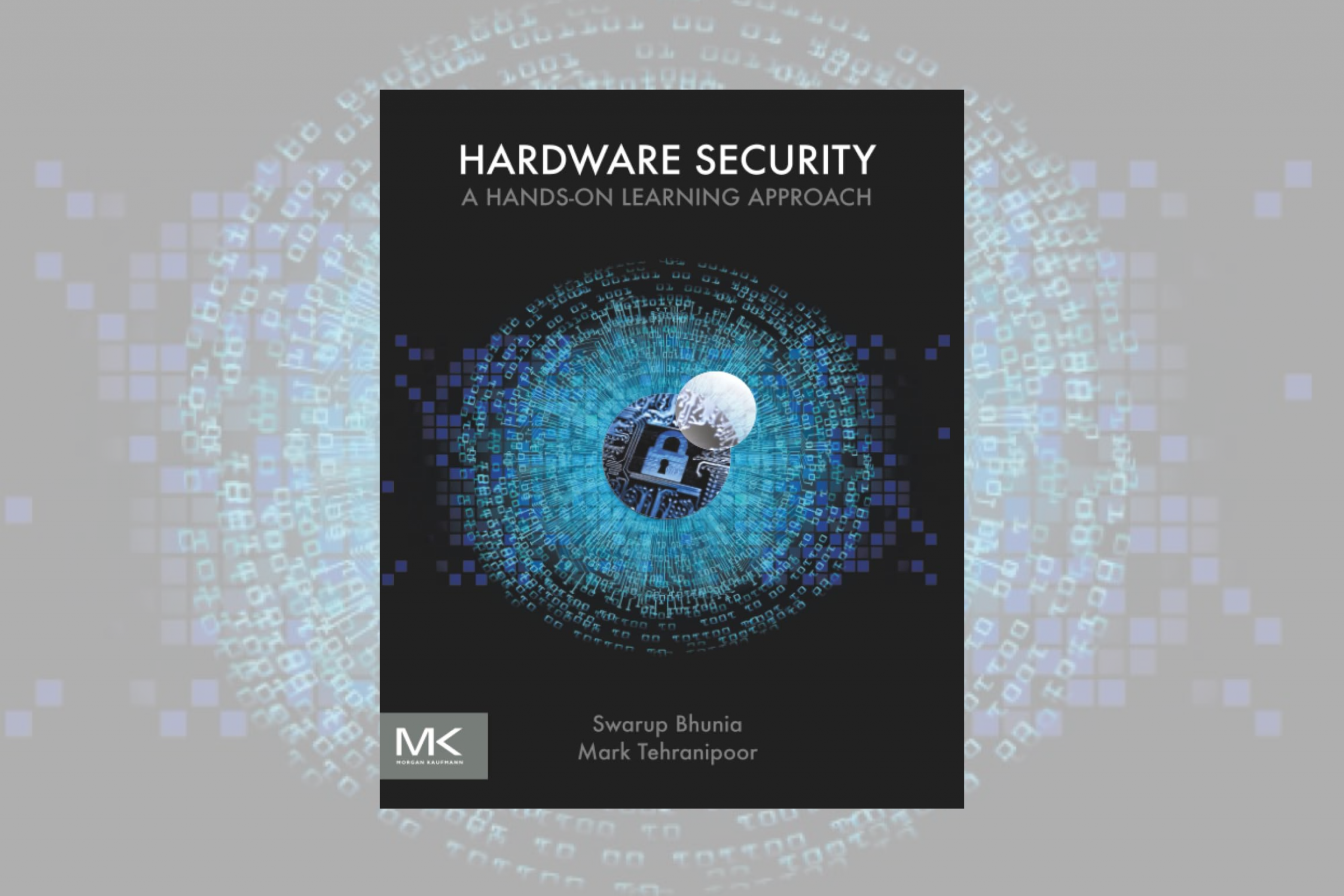
Hardware Security Textbook
The first textbook on hardware security that provides a thorough overview of computer hardware, including the fundamentals of computer systems and the implications of security risks, includes discussion of the liability, safety and privacy implications of hardware and software security and interaction; and gives insights on a wide range of security, trust issues and emerging attacks and protection mechanisms in the electronic hardware lifecycle, from design, fabrication, test, and distribution, straight through to supply chain and deployment in the field.
Lab News
Santa Fe College Instructors Engage in Hands-On AI Safety Training
Through the NASA-funded TRANSCEND project, Dr. Bhunia and a collaborative team of researchers are working to train community college instructors on AI and IoT safety concepts with hands-on, experiential training done on the AHA Board. Beginning with Santa Fe College, the goal is to train the instructors so they can integrate AI safety concepts into their own courses, and eventually bring this training to all 34 community colleges in Florida.
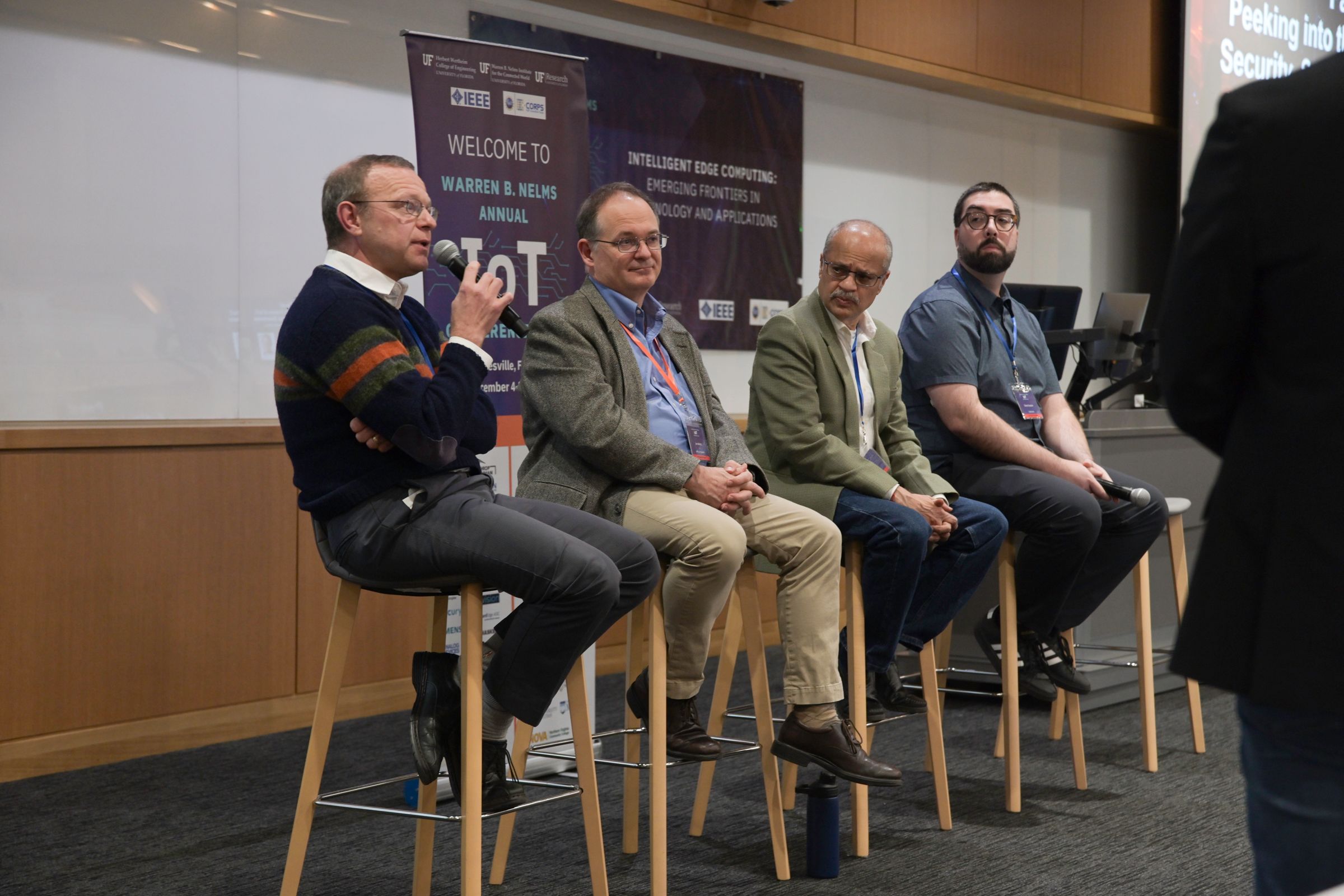
UF IoT Conference makes big impact in a flourishing field
The Warren B. Nelms Third Annual IoT Conference gathered hundreds of scientists, faculty, students and industry leaders to UF’s Malachowsky Hall for Data Science and Information Technology to discuss advancements, applications and continued demand for IoT devices, from home smart gadgets to wearable technology to industrial machines — physical devices embedded with sensors and software to connect and exchange data. The conference theme was Intelligent Edge Computing: Emerging Frontiers in Technology and Applications.
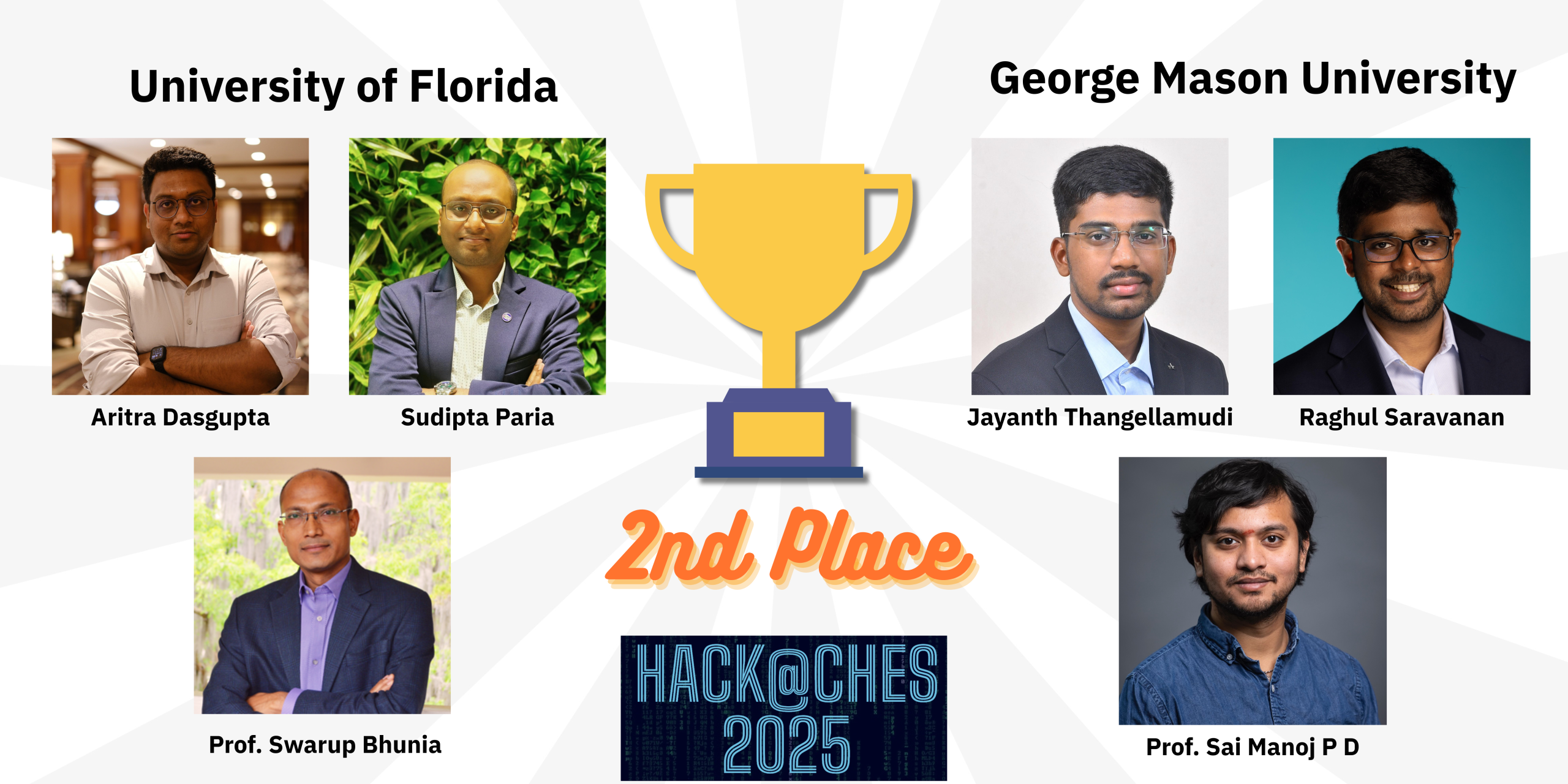
Student Team Wins Second Place in HACK@CHES Competition
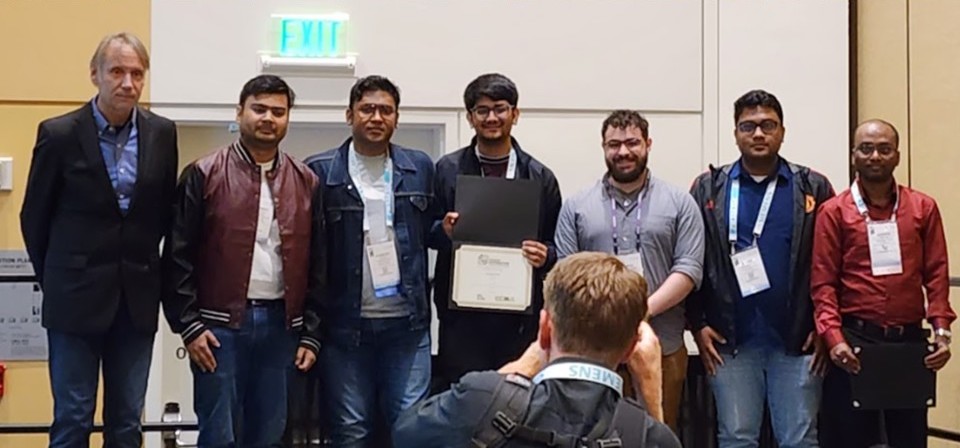
A student team representing the Warren B. Nelms Institute won 2nd Place in the HACK@CHES 2025 Competition. Team CapitalGators was comprised of Nelms Institute PhD students Sudipta Paria and Aritra Dasgupta, advised by Dr. Swarup Bhunia, and George Mason University PhD students Raghul Saravanan and Jayanth Thangellamudi, advised by Dr. Sai Manoj P D

Dr. Bhunia is Co-PI on a New NIST Grant to Create Pathways into Cybersecurity for Florida and Georgia Veterans
A new project aims to create pathways and opportunities in the cybersecurity and hardware security fields for military veterans. To address the critical shortage of cybersecurity professionals in Georgia and Florida and diversify the workforce in the semiconductor and microelectronic fields, the VETS-CYBER program will offer hands-on training and experience for participating veterans.

Introducing Hands-On Microelectronics Fundamentals in Children’s Museums
Dr. Bhunia and collaborators are introducing a new program at the Cade Museum for Creativity and Invention in Gainesville, FL. The curriculum will be delivered as a two-week summer camp called “AI & Microelectronics – Build, Innovate, Create!” at the museum from July 14th to July 25th, 2025. The program will use a kid-friendly version of the AHA board, which is being developed in the lab
Gallery