
Category: Paper Release
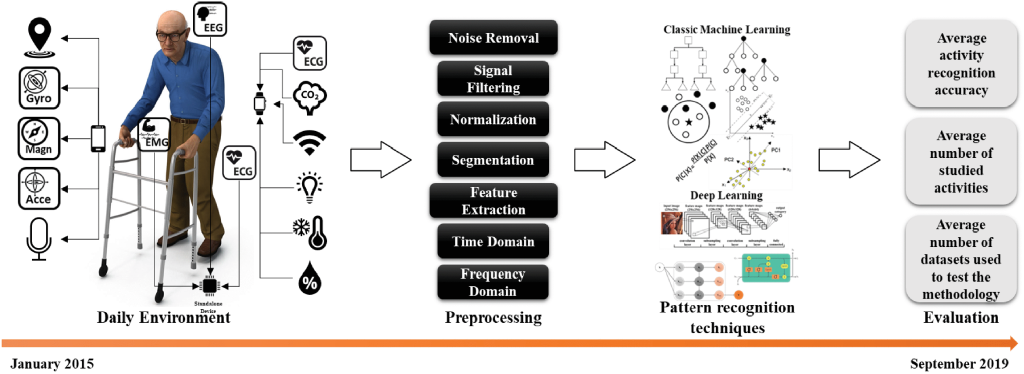
Human Activity Recognition Using Inertial, Physiological and Environmental Sensors
February 4, 2021A Comprehensive Survey Human Activity Recognition Research Paper [link] Nowadays, the aging population is becoming one of the world’s primary concerns. It is estimated that the population aged over 65 will increase from 461 million to 2 billion by 2050. Such a substantial increase in the elderly population will have significant social and health care […]
Read more »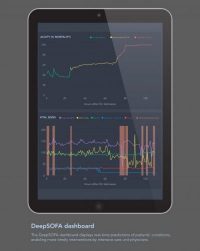
News Coverage in UFHealth News
February 19, 2019n a hospital’s intensive care unit, doctors get a cascade of data about each patient’s condition that can be challenging to quickly organize and interpret. Now, University of Florida researchers have developed and successfully tested an artificial intelligence system that delivers streamlined and timely details about crucial changes in a patient’s condition. The system, known […]
Read more »
Survey on EHR Deep learning available on IEEE JBHI
August 29, 2018Our survey paper on deep learning for EHR will appear in the September Issue of IEEE JBHI: Link
Read more »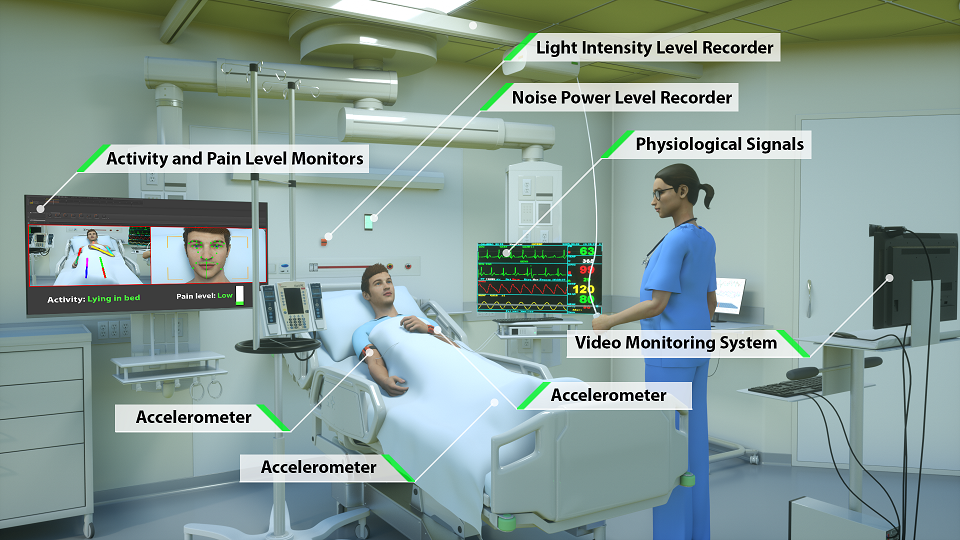
Intelligent ICU paper available on arXiv
April 30, 2018Currently, many critical care indices are repetitively assessed and recorded by overburdened nurses, e.g. physical function or facial pain expressions of nonverbal patients. In addition, many essential information on patients and their environment are not captured at all, or are captured in a non-granular manner, e.g. sleep disturbance factors such as bright light, loud background […]
Read more »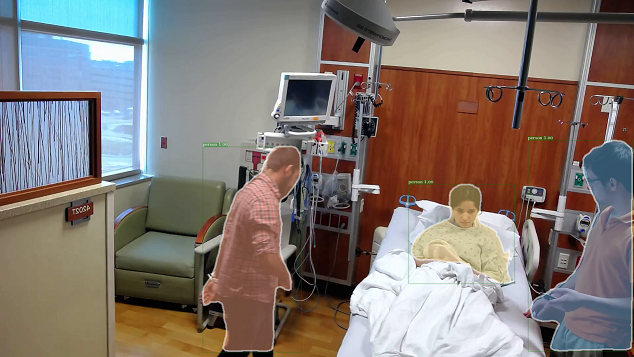
CVPR Workshop paper accepted
April 16, 2018CVPR workshop paper on activity recognition in the ICU is accepted. Congratulations to Anis and Kumar! Patients staying in the Intensive Care Unit (ICU) have a severely disrupted circadian rhythm. Due to patients’ critical medical condition, ICU physicians and nurses have to provide round-the-clock clinical care, further disrupting patients’ circadian rhythm. Mistimed family visits […]
Read more »
EMBC Paper accepted
April 16, 2018Our EMBC paper is accepted, congratulations to Anis, Raha, and Paul! Physiological timeseries such as vital signs contain important information about a patient and are used in different clinical application. However, they suffer from missing values and sampling irregularity. In recent years, Gaussian Processes have been used as sophisticated nonlinear value imputation methods on […]
Read more »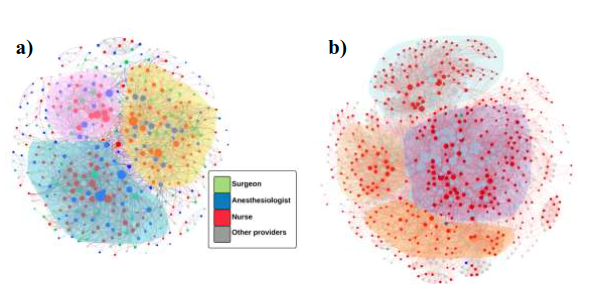
Paper on surgical team network structure is online
March 13, 2018We examined the structure of intra- and postoperative case-collaboration networks among the surgical service providers in a quaternary-care academic medical center, using retrospective electronic medical record (EMR) data. We also analyzed the evolution of the network properties over time, as changes in nodes and edges can affect the network structure. We used de-identified intra- and […]
Read more »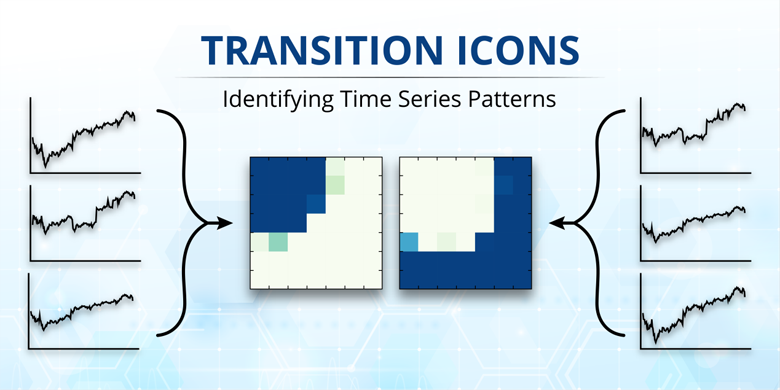
Paper on the cover of IEEE JBHI
March 12, 2018The prevalence of time-series data within the healthcare field necessitates the development of methods that can analyze the data in order to draw meaningful conclusions. Time-series behavior is notoriously difficult to intuitively understand due to its intrinsic high-dimensionality, which is compounded in the case of analyzing groups of time series collected from different patients. Our […]
Read more »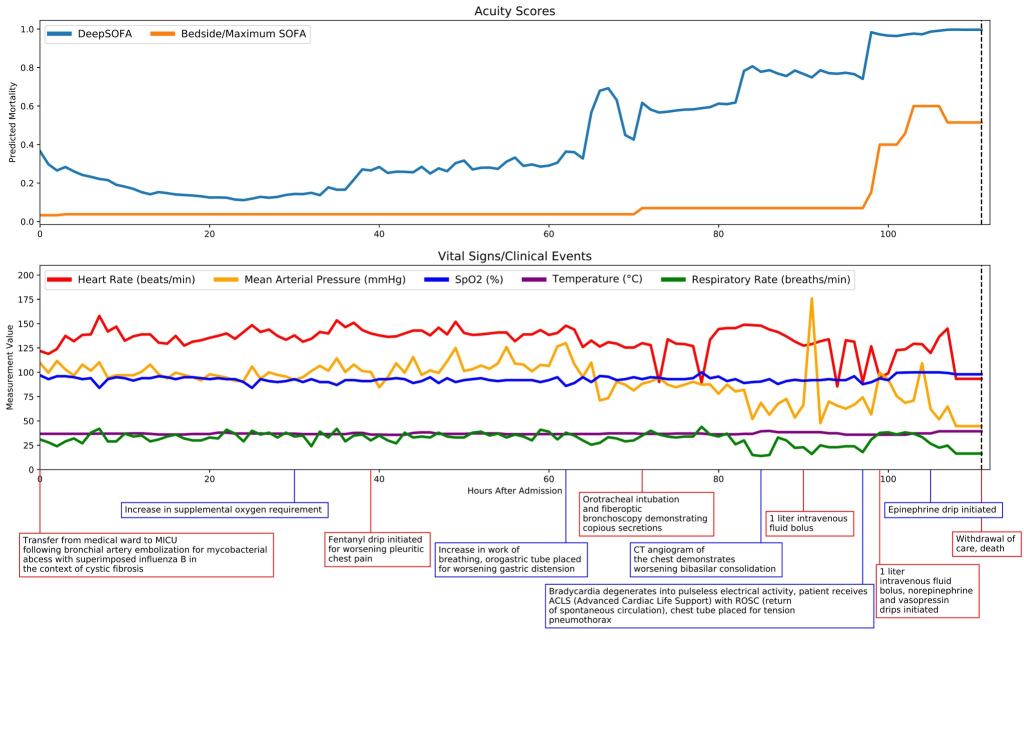
DeepSOFA beats your old SOFA score
March 12, 2018Traditional methods for assessing illness severity and predicting in-hospital mortality among critically ill patients require manual, time-consuming, and error-prone calculations that are further hindered by the use of static variable thresholds derived from aggregate patient populations. These coarse frameworks do not capture time-sensitive individual physiological patterns and are not suitable for instantaneous assessment of patients’ […]
Read more »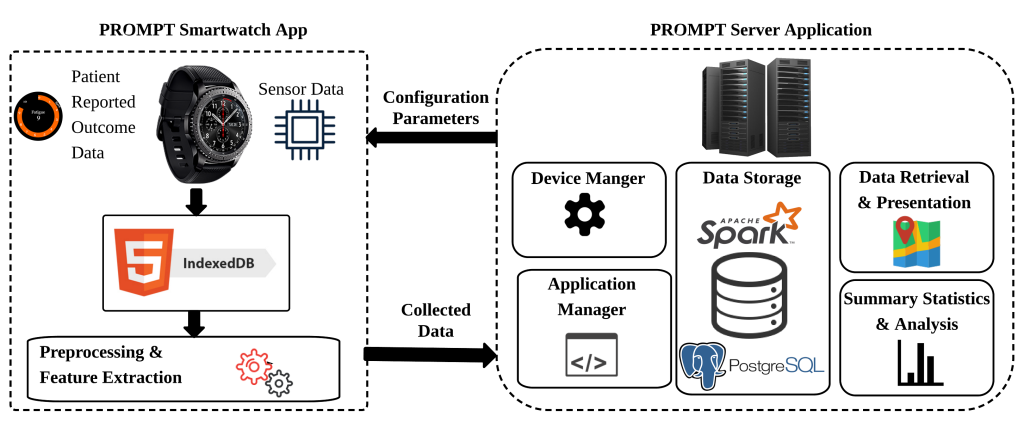
Paper available for open peer review
March 10, 2018Chronic pain, including arthritis, affects about 100 million adults in the United States. Complexity and diversity of pain experience across time and people and its fluctuations across and within days show the need for valid pain reports that do not rely on patient’s long-term recall capability. Smartwatches can be used as digital ecological momentary assessment […]
Read more »